Equipment Review
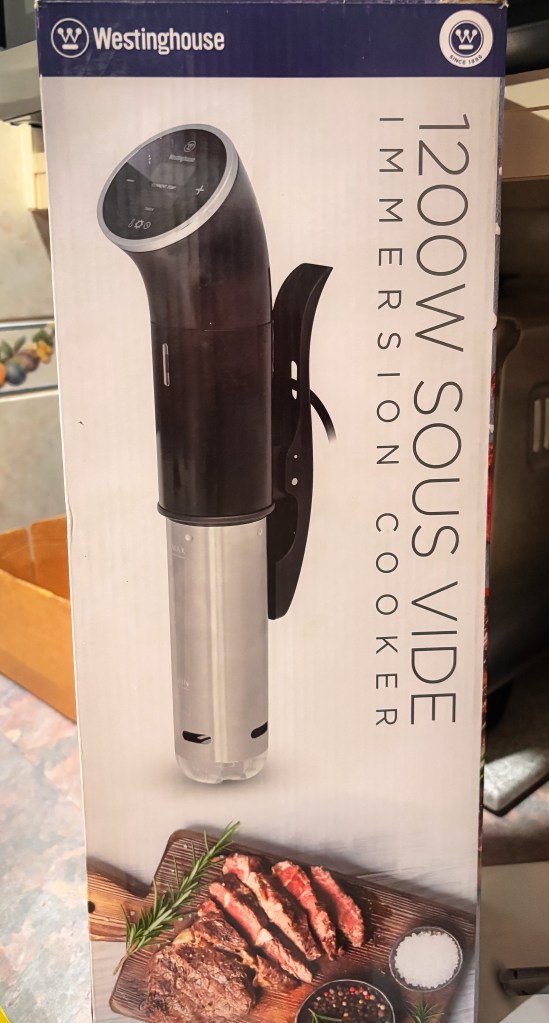
I was recently gifted a Westinghouse sous vide machine—not something I was actively looking for, but now that I have it, I realise it’s a tool I never knew I needed. Honestly, everyone should have one of these in their kitchen. It’s very easy to use, comes with straightforward instructions, and delivers consistently outstanding results.
First Impressions
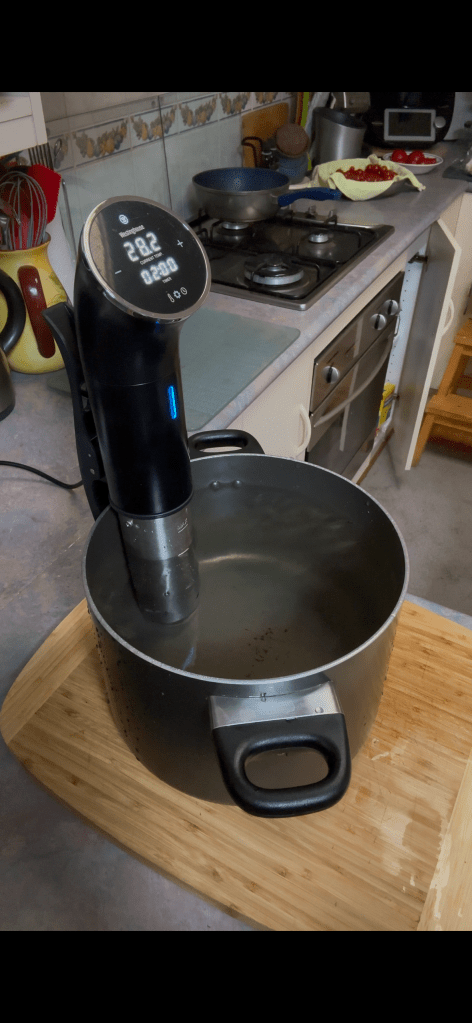
The setup is a breeze. Just attach it to a pot, fill with water, set your desired temperature and cooking time, and let it do its magic. The beauty of sous vide cooking is the precision—you know exactly when your protein (or whatever you’re cooking) will be perfectly done. No guesswork. No hovering over the stove. It’s like having a personal chef handling the temperature control for you.
What I’ve cooked so far
I’ve made two dishes with it so far, and both were absolute standouts. But let’s talk about the first one, because—wow.
Dish One: Sous Vide Duck with Peaches and Polenta
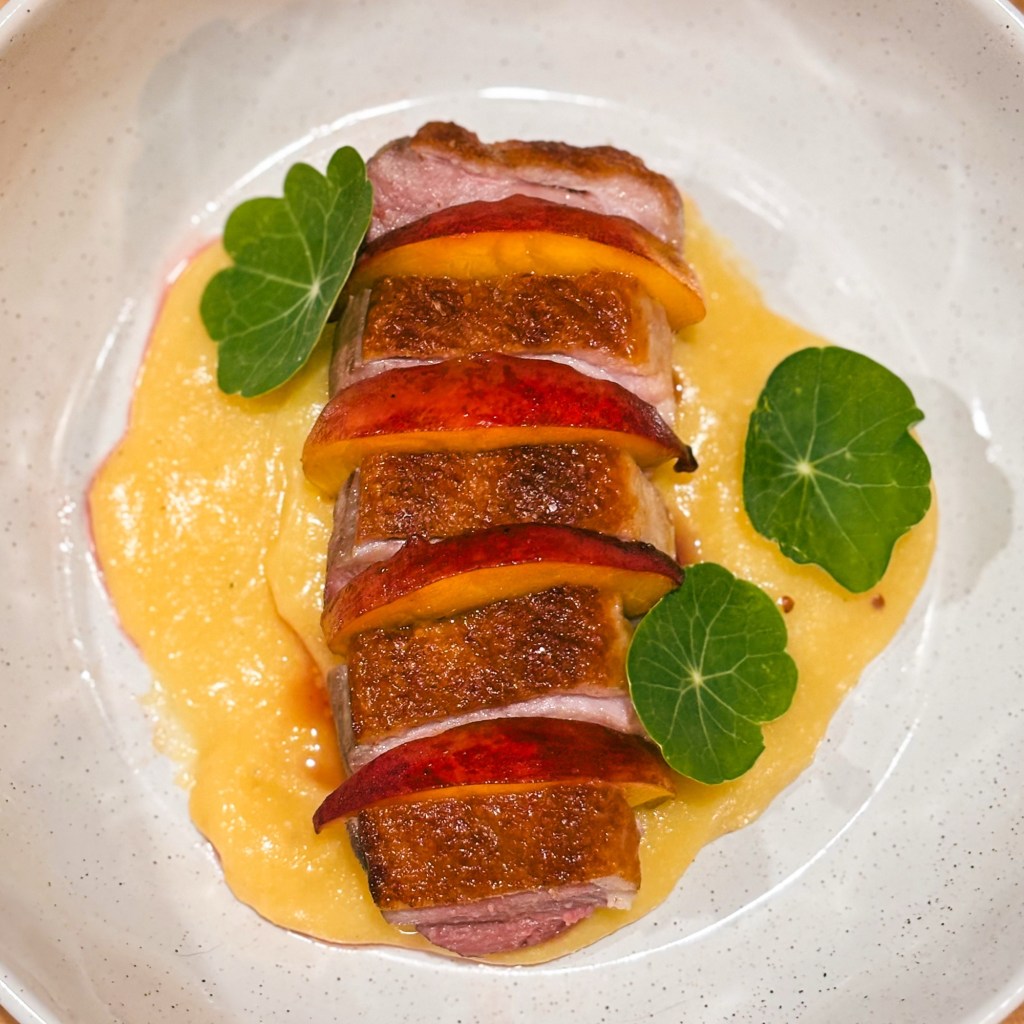
When I took my first bite of this dish, my reaction was simple: “Oh my god. Did I really make this?”
I used Luv-a-Duck duck breasts, a brand I’ve always found reliable—easy to source, consistently high quality. After patting the breasts dry and scoring the skin, I seasoned them with salt and pre-seared them to render out that glorious duck fat. While the duck was sizzling, I set up the sous vide bath at 57°C (135°F) for 2 hours.
Once the duck fat was rendered, I let the breasts cool for about 20 minutes. Then, into a vacuum-sealed bag they went, along with the rendered fat, fresh rosemary, and thyme. Sealed, submerged, and left to do its thing.
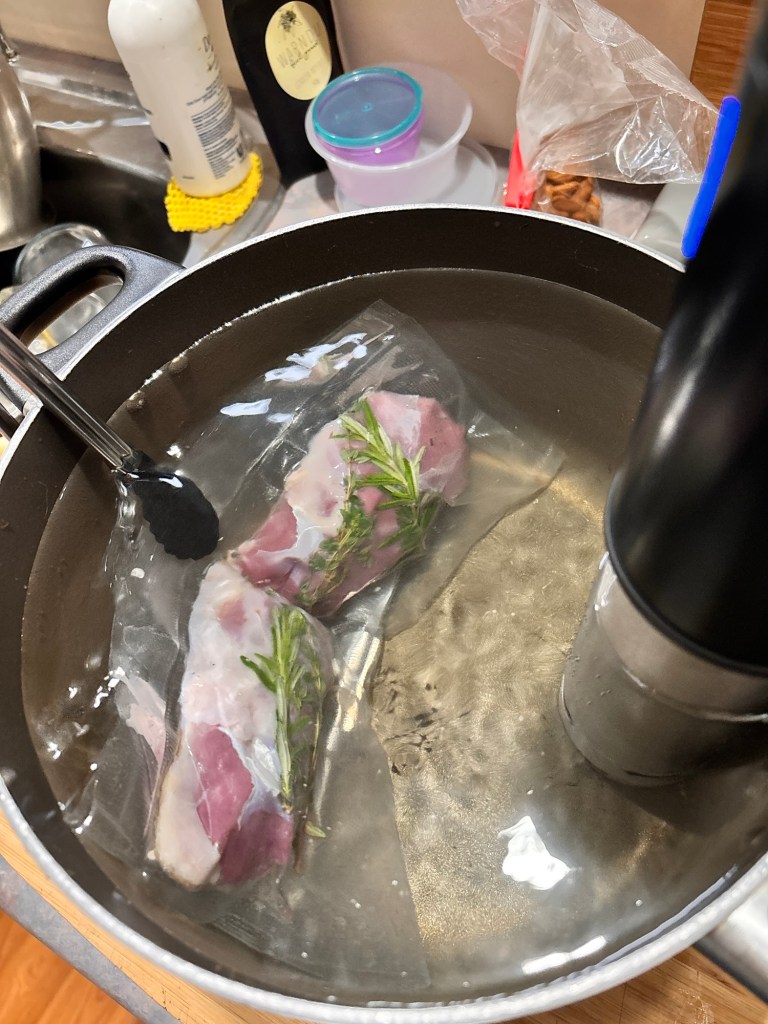
Here’s where sous vide really shines—you don’t have to guess if your food is cooked. It’s not “cheating”; it’s precision cooking. Sure, it takes longer than tossing something in the oven for 20–25 minutes, but the trade-off is perfection. Every. Single. Time.
With about 30 minutes left on the timer, I made creamy polenta and sliced fresh peaches from my tree into quarters. I seared the peaches in a hot pan until caramelized, then drizzled them with Maggie Beer’s Quince Vino Cotto, adding a couple of thyme sprigs to infuse extra flavor.
When the sous vide alarm buzzed, I removed the duck, patted it dry, sprinkled a little more salt on the skin, and gave it a quick, high-heat sear until the skin was golden and crisp. I even used a meat probe because, after all that effort, the last thing I wanted was to overcook it. (Trust me—use the meat probe.)
Slicing into the duck was like cutting through butter—perfectly pink, juicy, and tender. I served the slices over the polenta, nestled the peaches between them, and garnished with fresh nasturtiums.

Final Thoughts
This dish was simple to execute with the right tools, and I can’t recommend sous vide cooking enough for anyone looking to elevate their home cooking game. The Westinghouse sous vide machine has officially earned its spot on my kitchen counter.
Next time, I might swap the polenta for a silky-smooth sweet potato purée. But honestly? This dish doesn’t need much tweaking—it was that good.
Pro Tip: Get yourself a meat probe, some quality vacuum bags, and brace yourself for restaurant-quality meals at home.



 Lousy Food Banished
Leave a comment